Randy Described Eternity: The Dollar Store Stamp Font with Lasting Charm
There’s a particular kind of charm in imperfection—the slight bleed of ink, the uneven pressure of a stamp, the happy accidents that happen when human hands create something physical. That’s the exact spirit captured in the Randy Described Eternity typeface, a display font born not from a digital design studio, but from an actual set of rubber stamps purchased at a dollar store. This origin story isn’t just trivia; it’s the key to understanding the font’s unique, textured personality and why, over two decades after its initial release, it still holds a special place in a designer’s toolkit.
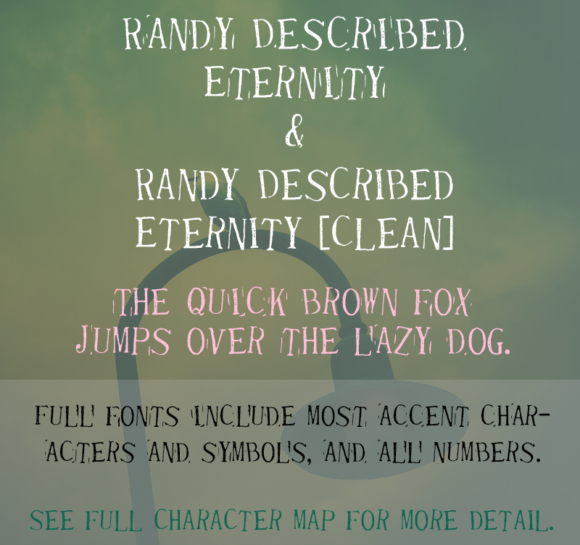
First released in August 2001, Randy Described Eternity was digitized directly from the impressions of those very stamps. The result is a typeface that feels handmade, organic, and full of character. Each letterform carries the subtle, tactile edges of its rubber origin, giving any text a warm, craftsmanlike quality. It’s a far cry from the sterile perfection of many modern fonts. For designers and creators looking to inject authenticity, nostalgia, or a DIY aesthetic into their work, this font offers a direct line to that feeling. In February 2016, the font was expanded with additional characters, including valuable accent marks, making it more versatile for multilingual projects. A companion font, Randy Described Eternity Clean, was also introduced. This version smooths out the stamp edges and tightens the letter spacing, offering a slightly more refined take while retaining the core handcrafted spirit—ideal for contexts where readability at smaller sizes is a priority.
A Font That Feels Handmade: Visual Personality and Appeal
What makes Randy Described Eternity visually compelling is its inherent inconsistency. Unlike geometric sans-serif fonts where every 'O' is a perfect circle, here each character has its own subtle personality. This isn’t a flaw; it’s its greatest strength. The slight variations mimic the organic feel of hand-stamping, creating a rhythm and texture that the eye finds engaging and trustworthy. It communicates effort, care, and a human touch—qualities that are increasingly valuable in our digitally saturated world.
The font falls into the category of a display typeface, meaning it’s designed for impact rather than body copy. Think headlines, logos, and short bursts of text where its unique character can truly shine. Its structure suggests a serif font foundation, but the stamped texture gives it a contemporary, almost script-like fluidity. This blend makes it remarkably versatile. It can feel vintage and rustic for a craft brewery’s branding, or playful and energetic for a children’s event poster. The key is context. When you choose Randy Described Eternity, you’re not just selecting letters; you’re choosing a specific mood and set of associations for your project.
From Brand Identity to Social Media: Practical Applications
The true test of any creative font is how it performs in the wild. Randy Described Eternity excels in projects where personality and memorability are paramount. Its textured appearance makes it a standout choice for logo design, especially for brands in the artisanal food, craft, boutique retail, or indie music spaces. A logo set in this font immediately tells a story of craftsmanship and individuality.
For packaging design, it can be transformative. Imagine it on the label of a small-batch jam, a coffee bag, or a candle box. The font’s tactile quality suggests the product inside is made with similar care and attention to detail. It bridges the gap between the digital label and the physical product experience. In the realm of social media graphics, it cuts through the noise. A quote card, an announcement, or a promotional graphic using Randy Described Eternity feels more personal and less like a generic template, which can significantly boost audience engagement.
Don’t overlook its power in print. For invitations to weddings, parties, or corporate events, it sets a tone of thoughtful creativity. On posters and editorial layouts, it can be used for pull quotes or section headers to add visual interest and break up monotony. Even for digital products like e-book covers or online course materials, this font helps establish a distinct brand identity that feels approachable and authentic.
Making It Work: Pairing and Readability in Practice
Using a display font like this effectively requires a bit of strategy. Its strength is also its limitation: the very texture that gives it charm can reduce legibility at very small sizes or in long paragraphs. The golden rule is to use it for headlines, titles, and short phrases. For body text, always pair it with a highly readable sans-serif font or a clean serif font. A pairing like Randy Described Eternity for the main headline with a font like Lato, Open Sans, or even a simple Georgia for the supporting text creates a beautiful contrast that is both eye-catching and easy to read.
Always test your pairings. Does the personality of the display font clash with or complement the body font? Does the overall typographic hierarchy guide the reader’s eye naturally? Remember, the goal of modern typography is clear communication. The Randy Described Eternity Clean variant is a fantastic tool for situations where you love the font’s vibe but need a bit more clarity. It’s perfect for slightly smaller subheadings or digital interfaces where screen rendering might muddy the original’s edges.
Finally, a note on licensing. As a premium font, it’s essential to ensure you have the correct commercial license for your intended use, whether that’s for a client project, merchandise for sale, or widespread marketing materials. Investing in a proper license supports the original creator and ensures your project is legally sound—a small but crucial step in professional practice.
Ultimately, Randy Described Eternity is more than just a set of characters. It’s a piece of design history with a story, a texture, and a personality that can elevate a project from simply informative to truly memorable. It reminds us that sometimes, the most powerful design assets aren’t the most polished, but the ones that feel genuinely human.