Decor: Forging a Visual Legacy with Gothic Grandeur
There is a profound difference between a font that simply sits on a page and one that commands attention, etching itself into memory like a mark burned into ancient wood or carved into stone. In a marketplace saturated with sleek minimalism and fleeting trends, a new level of visual storytelling is emerging, one that embraces weight, texture, and narrative depth. This is the domain of the display typeface, the visual anchor that tells a story before a single word is read. For designers, brand strategists, and creators seeking to inject a powerful sense of history, drama, and unapologetic presence into their work, the search for the perfect typographic voice can be a quest in itself. It requires a font that is not just seen, but felt—a font that carries the weight of tradition while speaking with a bold, contemporary edge.
The Anatomy of Medieval Modernity
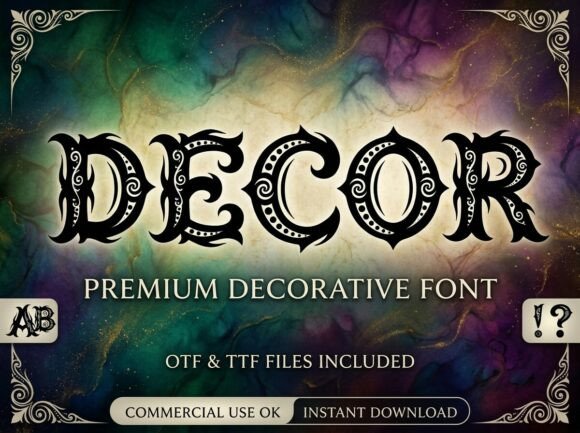
At its core, Decor is a premium font that operates as a piece of architectural art. It draws its soul from the deep wells of Gothic Blackletter calligraphy, but its execution is anything but archaic. Think of the intricate ironwork on a medieval gate or the dramatic, flared lines of a vintage tattoo. This typeface captures that same hand-forged, monumental quality. Its design philosophy is built on a dual-layered letter structure. Each capital letter is framed by a powerful outer envelope, creating a strong silhouette, while the interior reveals a universe of intricate detail. Imagine hand-carved filigree scrolls, precise symmetrical dot arrays, and dramatic outer barbs that flare out like controlled, fiery spikes. This isn't just a set of letters; it's a system of ornamental design that turns every headline into a focal point.
The visual appeal lies in this controlled complexity. It provides the heavy, impactful presence of a traditional serif font or a bold sans serif, but with a level of artistic detail that is entirely its own. For a logo design, this means an instant identity that feels established, historic, and rich with narrative. For packaging, it transforms a simple label into a tactile, premium experience. The font’s weight and style make it an unmatched choice for projects where the visual must communicate power, mystery, or a dark, romantic elegance.
Strategic Applications for Maximum Impact
Understanding where a typeface like Decor excels is key to leveraging its power. Its personality is strong, so it shines brightest when used strategically for headlines, logos, and short, impactful statements. Here is how its unique character translates across different creative and commercial projects:
- Branding & Logo Design: For brands in niche markets—think artisanal distilleries, boutique publishers, alternative fashion labels, or even high-end barbershops—this font provides a foundational identity. A logo set in Decor doesn't just name the business; it establishes a mood and a story. It signals craftsmanship and a commitment to a distinct aesthetic.
- Packaging & Merchandise: On a luxury liquor label, a dark academia book cover, or the front of a heavy metal band t-shirt, the font’s intricate details and bold form create immediate shelf appeal and brand recognition. It turns merchandise into collectible art.
- Digital Presence & Social Media: In the fast-scrolling world of social media, a post or story header set in Decor stops the thumb. It adds a layer of professionalism and thematic depth to Instagram graphics, YouTube thumbnails, and website hero sections. For a blog focused on history, fantasy, or edgy culture, using this typeface for article titles instantly sets the editorial tone.
- Print & Editorial Design: Think of event posters for a theater production, music festival, or gallery opening. Decor provides the dramatic, headline-grabbing power needed to communicate the event's essence at a glance. In editorial layouts, it can be used for chapter titles or pull quotes to create a strong visual rhythm.
Pairing for Purpose and Clarity
The true artistry of using a powerful display font like Decor lies in creating balance. Its ornate, heavy nature means it is not designed for body text. Its role is to be the star of the show, supported by a complementary cast. This is where the practical skill of font pairing comes in.
The goal is to let Decor handle the drama while a cleaner, more legible font handles the information. For a cohesive brand identity, you might pair it with a clean, geometric sans serif font for website navigation, product descriptions, and social media captions. The contrast between the ornamental display font and the minimal sans serif creates a professional and visually interesting hierarchy. Alternatively, pairing it with a simple, elegant serif font can reinforce a vintage or academic feel, perfect for book interiors or formal invitations. The key is to test your pairings. Place your Decor headline next to paragraphs set in your chosen body font. Does the combination feel harmonious or chaotic? Does the body text remain highly readable, or does it get lost? This testing phase is crucial for ensuring your design is both beautiful and functional.
From Aesthetic to Audience Connection
Ultimately, typography is a tool for communication and connection. Choosing a typeface like Decor is a strategic decision to speak a specific visual language. For an audience immersed in dark academia, fantasy, vintage aesthetics, or alternative music, this font doesn't just attract attention—it builds trust. It shows that you understand their visual vernacular and are speaking directly to their interests. This alignment between visual identity and audience expectation is a cornerstone of effective marketing and brand building.
When selecting any creative font for commercial use, always review the licensing terms to ensure they cover your intended applications, whether for digital products, print materials, or merchandise. A premium font typically comes with a clear license that protects both the creator and the user, providing peace of mind for your professional projects.
In the end, the right typeface does more than fill space; it builds worlds. It can transport a viewer to a candle-lit study, a fog-filled graveyard, or a grand, iron-forged hall. By incorporating a typeface with such distinct structural and historical inspiration, you are not just choosing a font for a project—you are choosing to make a statement that is as enduring and intricate as the design itself.