Making: The Handwritten Font for Joyful, Elegant Design
There’s a particular kind of design that feels like it was made with a smile. It’s the wedding invitation that makes you feel giddy, the product label that feels personal, the social media post that feels warm and approachable. Often, the secret ingredient isn’t a complex illustration or a bold color scheme—it’s a thoughtfully chosen typeface. If your creative work needs to convey warmth, romance, and a touch of casual elegance, a font like Making might just be the missing piece you’ve been searching for.
More Than Just a Script Font: Capturing a Feeling
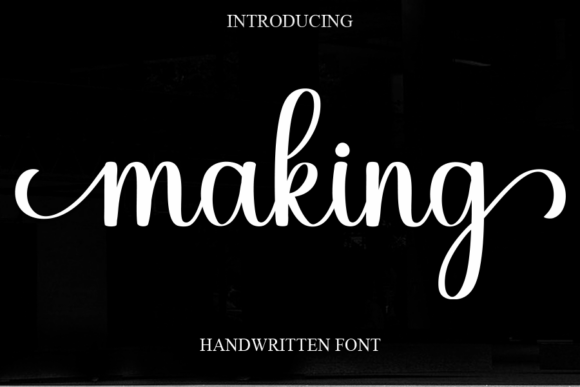
Making is a sweet, cursive handwritten font designed to inject a gentle, joyful personality into your projects. Unlike rigid, formal script fonts, its letterforms flow with a natural, relaxed rhythm. The connections between characters feel organic, mimicking the subtle variations of real handwriting. This isn't about mimicking a historical calligraphy style; it’s about capturing a modern, heartfelt aesthetic. The result is a typeface that feels authentic and inviting, making it a versatile tool for anyone aiming to create designs that resonate on a human level.
Its visual appeal lies in this balance. It’s fancy enough to feel special for occasions like weddings or luxury branding, yet casual enough to avoid feeling stuffy or inaccessible. This duality allows it to bridge the gap between professional polish and personal touch—a crucial balance for many modern brands and creators.
Where This Handwritten Font Truly Shines
The true test of any creative font is its application. Where does a typeface like Making excel, and how can you leverage its strengths? Let’s move beyond theory and look at practical uses.
For branding and logo design, Making can serve as the centerpiece for businesses that want to appear friendly, artisanal, or personal. Think of a boutique bakery, a floral studio, a personalized jewelry maker, or a life coach. Using it for a wordmark or in combination with a clean sans serif for body text creates an immediate sense of approachability and care. It tells customers, “There’s a human behind this brand.”
In packaging design, it can transform a simple box or bag into something that feels like a gift. A handwritten-style font on a candle label, a gourmet food package, or a skincare product suggests craftsmanship and attention to detail. It adds a layer of perceived value that generic, off-the-shelf fonts often lack.
For digital and social media graphics, Making is a powerhouse. In a feed crowded with sharp, geometric sans serifs and bold serifs, a flowing script font stands out. It’s perfect for quote graphics, Instagram story highlights, YouTube video thumbnails, or Pinterest pins promoting a blog post or product. It adds personality and can significantly boost engagement by making content feel more personal and shareable.
Don’t overlook its power in print and editorial layouts. A subheading in a magazine spread, a pull quote in a brochure, or the title on a poster can be elevated with this font. It draws the eye and creates a focal point of elegance. Similarly, for wedding stationery, greeting cards, and invitations, it’s a natural fit, setting a romantic and celebratory tone from the first glance.
Pairing and Practicality: Using Making Effectively
While Making is beautiful, using any script font effectively requires a bit of strategy. Here’s how to ensure it enhances, rather than hinders, your design.
Font Pairing is Everything. Never set a paragraph of body text in a cursive handwritten font—it will be a nightmare to read. The key is contrast. Pair Making with a highly legible sans serif font like Montserrat, Open Sans, or Lato for body copy. For a more sophisticated feel, you could pair it with a simple, clean serif font like Georgia or a modern serif. The rule of thumb is: use the script font for headlines, logos, or short accents, and let its companion handle the heavy lifting of readability.
Prioritize Readability. Always test your chosen font at the size it will be used. A font that looks gorgeous in a large headline might become an illegible squiggle when scaled down for a caption. Ensure there’s enough contrast between the text color and the background. For web design, this is non-negotiable; a beautiful font loses all value if users can’t read it.
Understand the Included Styles. A quality premium font often comes with more than just the basic letters. Check if Making includes stylistic alternates, ligatures (special character combinations like “th” or “ll”), or swashes. These features allow you to customize the look, adding flourishes or changing the feel of specific letters to perfect your design. They are the difference between a good result and a truly polished one.
Licensing Matters. If you’re using this font for a client project, merchandise you sell, or marketing materials, you must ensure you have the correct commercial license. Most font licenses are not transferable, so if you’re a designer, the client may need to purchase their own license for ongoing use. This is a critical, often overlooked, step in professional practice.
Aligning Font Choice with Your Project Goals
Before you download any new design assets, ask yourself what you’re trying to communicate. Typography is a silent ambassador for your message.
If your goal is to build a brand identity that feels trustworthy, established, and authoritative, a script font like Making might be best used sparingly—as an accent. If your goal is to feel innovative, clean, and minimalist, a different category of typeface might be more appropriate.
However, if your brand or project thrives on personal connection, creativity, romance, or artisanal quality, then a handwritten font like Making is not just an option; it could be a strategic asset. It helps create visual consistency across your touchpoints—from your website header to your thank-you cards—reinforcing that core brand personality at every turn.
Ultimately, the best font is one that serves the project and delights the audience. It should feel intentional, not accidental. Take the time to experiment, create mockups, and see how the font feels in context. Does it make your logo feel more “you”? Does it make your social graphic more engaging? Does it align with the emotions you want to evoke? When the answer is yes, you’ve found more than just a font—you’ve found a key component of your visual voice.